


Nitzanei Shenkar
- In 2013, Shenkar established a flagship social project program led by the faculties of Design and Art.
- Participants: 95 teenagers from low socioeconomic backgrounds, from central Israel.
- The program is led by 20 students.
- The participants are exposed to a variety of workshops and lectures led by Shenkar’s leading design and art teachers.
- An academic team guides and supervises the program content and its ongoing activities.
Long-term goals and planning:
- Low socioeconomic strata are poorly represented at design schools, mainly due to a lack of awareness about the field. Introducing this field to young, promising minds will help integrate more talent from diverse backgrounds, who may not have the benefit of early exposure to many different fields.
- Establishing a multi-year supportive framework for high school students will provide the tools and knowledge needed to pursue design in academia. Program graduates will have the opportunity to enroll in academic design and engineering studies, an opportunity not commonly available to young people from this background, for various reasons.
- Over the course of 3 years, the program introduces different design disciplines, with workshops and personal instruction from Shenkar students and senior lecturers.
HaBiluim School
- For the past two years, the Department of External Studies has been running an enrichment program for Habiluim students (an interior design and architecture school).
- As part of the program, participants attend five meet-ups at Shenkar, where they are introduced to various workshops — plastics, printmaking, ceramics — participating in practical work alongside Shenkar students and graduates, and receiving related enrichment classes from senior lecturers across departments. Their parents also get to experience the workshops.
- The program concludes with a joint architecture project, a collaboration between participants, students and the lecturer. So far, about 140 high school students have visited Shenkar, and the project is receiving praise from all those involved.
- The project is led by Ms. Shirly Gilat-Robins, a senior lecturer in the Department of Interior, Building and Environment Design. The activities are led and managed by Shenkar’s External Studies Unit, headed by Mr. Oded Chai.
Women Empowered
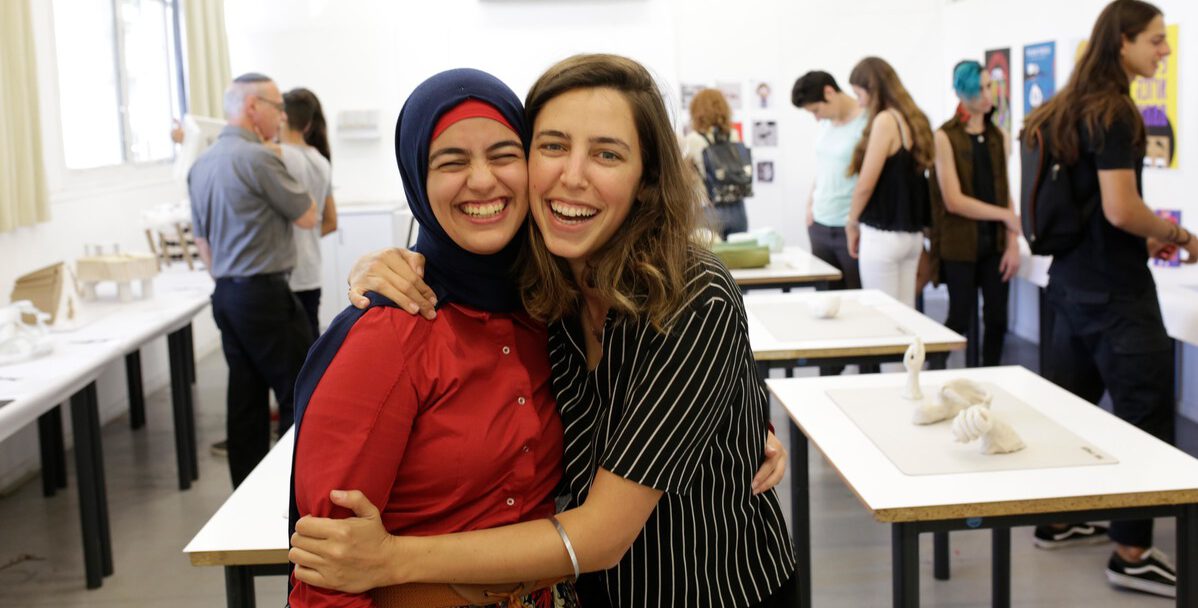
- Prof. Hanna Dodiuk, former head of the master’s degree program in polymer materials engineering at Shenkar, launched the Women Empowered program, which seeks to establish a space where both genders can appreciate the abundant diversity among women: perspectives, places, backgrounds, religions and lifestyles.
- Participating students participate in a cycle of learning and social action, to hone and raise awareness and social sensitivity, both in the student space and outside it. During the project, participants create a discussion-oriented, collaborative and empowering leadership cycle for Israeli society, based on human and social rights. In the first stage, this Shenkar initiative includes mentoring and enrichment by outstanding upper-year female students, to support younger female students with academic-social difficulties. The program includes students from all school departments (from both the faculties of Design and Engineering) in its pursuit of excellence.
- Each program cycle offers 12 female students the opportunity to take part in varied enrichment workshops for advancing learning: from time management and planning to learning strategies. The mentees receive individual and/or group tutoring, along with academic support in relevant fields throughout the school year.
The Women’s Courtyard
- For several years, the Department of Fashion Design has been volunteering with the Women’s Courtyard in Jaffa. The department initially donated a historical garment for presentation at an impressive fundraising evening held at the Peres Center for Peace. In the second phase, students from the department, under the guidance of Rachel Berman-Hadari, began joining Women’s Courtyard’s various projects — the creation of the Jaffa Port fashion store has been the highlight.
- The Department of Fashion Design students had weekly meetings with the young women and used different, diverse tools to create a common design language with those for whom the Women’s Courtyard is home. These meetings included crafts and activities utilizing a range of art materials, fabrics and sewing.
- The collaboration was highly effective, thanks to the students’ ability to instill aesthetic and professional values of the fashion world in the girls and introduce them to new content that will stay with them.
- The Department of Fashion Design considers the democratization of knowledge an integral part of its program and purpose and is proud to participate in the critical work of the Women’s Courtyard.
Special needs — Department of Textile Design course
- Course goals — to introduce students to inclusive design, design for special needs and art therapy, by allowing students to interact with special needs populations.
- The students work in teams of two or three and initiate contact with a group/organization caring for these populations of their choice, and then work together to develop a unique product.
- With guidance, the teams work hand-in-hand and collaborate with the special needs groups to produce a raw textile material. Afterwards, the product is formulated into a commercial product within the design space.
- The course facilitates direct interaction between students and special needs populations, with all that entails. The students lead the product planning, and the assembly line is constructed together with the special needs participants who will manufacture the product independently of the students, even after the semester ends.
- The course consists of meetings with professionals and therapeutic teams (therapeutic staff, administrative staff, designers), followed by a series of work meetings with organizations and groups caring for special needs populations, in order to identify needs. Between meetings, the students have different design assignments and exercises for submission at the next meeting. The course also includes lectures, providing an overview of current topical developments in Israel and globally.
- Course duration — one semester, 15 four-hour lessons.
Gaming App Development Course for Youth with Special Needs
- This course is focused on application design and development, interactive games and virtual reality environments, with an emphasis on special needs populations, particularly children and teenagers.
- The course reviews various development environments for online digital technology and presents methods and tools for design briefs and development of applications, interactive games and virtual reality environments.
- To develop, accommodate and optimize user interfaces based on the youths’ unique needs, the special needs organization turned to Shenkar to develop advanced technological tools for interactive internet activities, tailored to the ‘Variety Scouts’ special needs youth.
- The purpose of the joint venture was to develop an advanced internet system/application for educational-experiential interaction.
- About 15 students from the Departments of Software Engineering and Visual Communication participated in the most recent course.
Design Summer School
- Shenkar believes that academia should be accessible to all population segments, irrespective of socioeconomic status. Pursuing this approach, in 2012 Shenkar launched innovative study programs to advance social issues, engaging students and academic staff in widespread social action.
- In collaboration with Faculty of Design students, this program introduces design and art at Shenkar to middle school students from low socioeconomic backgrounds in Ramat Gan.
- A wonderful initiative between Shenkar and Bank Mizrahi Tefahot spurred the idea of integrating a community summer program in Mizrahi Tefahot Square’s Elite Building.
- The project was led as part of “Nitzanei Shenkar” with guidance from design students and the participation of dozens of elementary school students from Ramat Gan.
- In the “Design Summer School” project — Ramat Gan elementary school students (“HaBiluim”, “HaManhil” and “Ben-Gurion”) showing affinity and interest in art and design were invited to participate. For two weeks they experienced a variety of workshops and creative activities led by Shenkar students, who also accompanied them on tours and exhibitions.
- After two cohorts of the summer camp, the exhibition was launched, showcasing the young artists’ creations, as well as documentation of the work process and interactive experience between the students.
- About 10 students from the Faculty of Design and 100 elementary school students from Ramat Gan participated in the project.