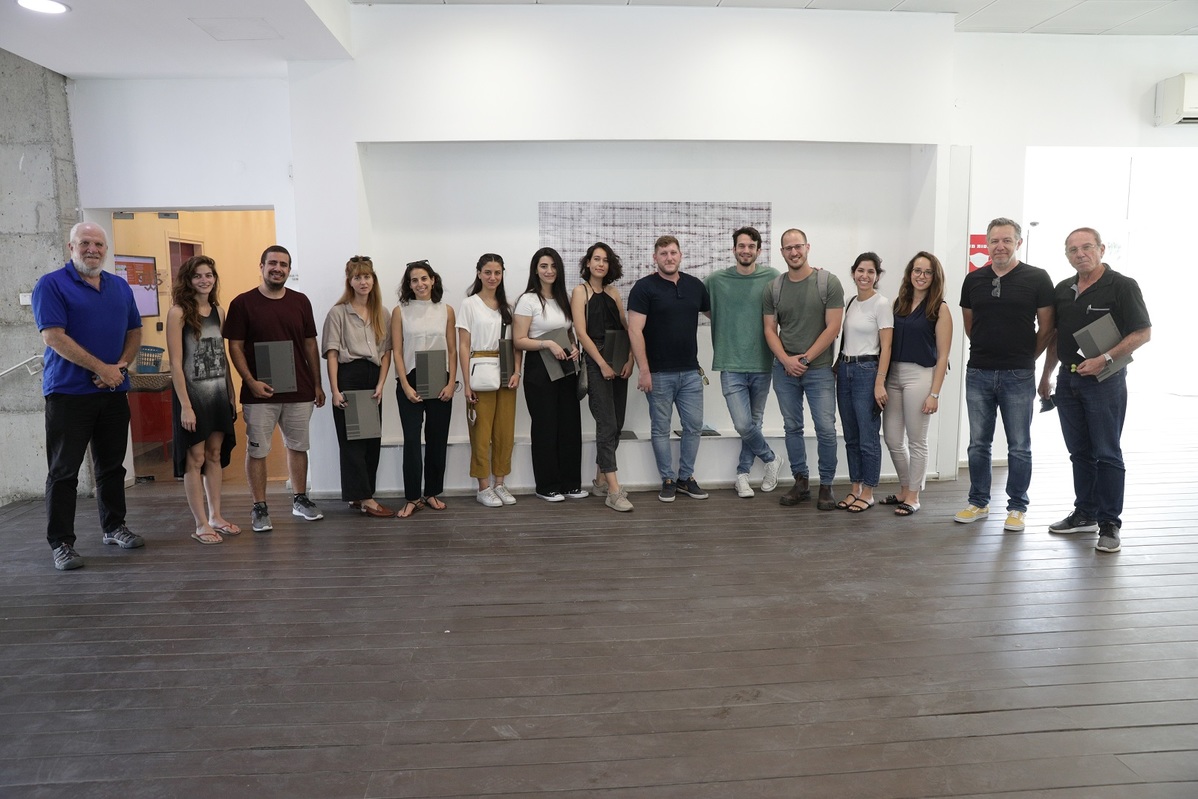
The award ceremony was held on Wednesday, August 26, at the Rozen Center for Sustainability at Shenkar College. President of Shenkar Sheizaf Rafaeli attended the ceremony and congratulated the winners: "You are spearheading sustainability in design. For a decade now, Shenkar has been contributing to comprehensive climate change research. So far, most of these efforts have been taking place here, at the Rozen Center for Sustainability, but we are gradually harnessing our entire academic enterprise to work toward minimizing the damage of climate change."
Professor Shmuel Kenig, Vice President of Shenkar and Director of the Research and Development Authority, praised the students for their accomplishments and talked about the history of the Rozen Center for Sustainability: "The center was founded in 2012 with funds contributed by Yaakov Rozen—hence the name. Over the years, the center has carried out many research projects on sustainability, the most prominent among them being 'Circle,' a study of polymer recycling." The next speaker was the head of the Center for Sustainability Michael Keidar: "First of all, I would like to thank you for responding to our call for applicants. You chose sustainability to be the focus of your projects. You made sure your projects directly addressed at least three of the UN's Sustainability Development Goals. We don't take this for granted. But beyond that, all of this year's projects have been fascinating. They generated riveting discussions and valuable arguments for us, the jury. Your projects have been evaluated based on more than applicability. We also considered your creativity, worldview, research, and innovation. Sustainability forces us all to think outside the box, and you have done so with great success."
The Rozen Award for Sustainability is presented annually to engineering and design students whose graduation projects deal with the subject of sustainability and directly address at least 3 of the UN's Sustainability Development Goals (SDGs). The winners receive a prize in the amount of NIS 20,000 total, courtesy of the Yaakov and Tammy Rozen Foundation. The prize is divided equally among the ten winning projects.
The award's jury panel consists of:
- A faculty member from the Faculty of Engineering (Dr. Tal Goldrath, head of the Department of Chemical Engineering)
- A representative from the Faculty of Design (Dr. Assaf Krebs, director of Design Factory Shenkar and senior Shenkar faculty member)
- A representative from the Ramat Gan municipality (Mor Harir, head of innovation and sustainability at Ramat Gan municipality)
- A representative from the industry (Keren Shinar, sustainability manager at HP Indigo)
- Miki Keidar, manager of the Rozen Center for Sustainability
The Rozen Center for Sustainability is a hub for promoting sustainability research and cultivating sustainable practices. Offering both theoretical knowledge and information on practical applications, the center is a resource for all Shenkar's departments and a platform for interdisciplinary collaborations. The center works with academia, the private sector, and the government to address the UN's 17 Sustainability Development Goals.
Here are the winning projects:
Forest Ranger Druids—Segev Caspi, Industrial Design
According to the UN's data, forests are home to over 80% of all plant and animal species on Earth.
As the world's population grows and modernization takes hold, more and more forests are being cut down to serve humankind's needs. Forests and wild landscapes are the lungs of the Earth, storing and sequestering excess carbon dioxide from the atmosphere.
The project addresses 3 of the UN's 17 Sustainability Development Goals: "promote inclusive and sustainable industrialization and foster innovation," "take urgent action to combat climate change and its impacts," and "sustainably manage forests and halt biodiversity loss." The forest ranger druids are robotic forest rangers tasked with reforestation followed by sustainable forest maintenance. Each robot is designed to fulfill a specific role in conserving and maintaining a healthy forest.
To design the robots, their look, and their roles, the students studied common tasks performed by forest rangers and researched the needs of different forests worldwide.

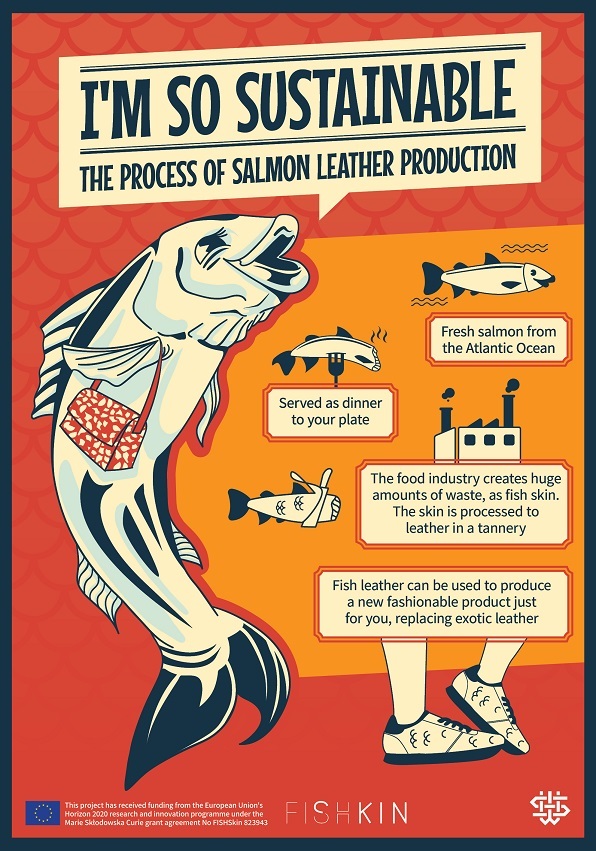
The Environmental Effects of Using Salmon Skin as a Raw Material for the Fashion Industry—Keren Alice Bibi, Chemical Engineering
Part of an international sustainability initiative called FISHSKIN, this project examined the environmental impact of processing salmon skins for use as a leather alternative in the fashion industry.
The student developed a tool for analyzing the way the leather is processed at the factory. The tool identifies the processes and materials that generate the most pollution, allowing the factory to minimize the use of these processes and materials or find more sustainable alternatives. The project addresses the UN's Sustainability Development Goals by providing a solution for reducing pollutant emissions from leather processing and reusing waste from the food industry as a raw material for the fashion industry. Currently, fish skins from food industry waste are mostly dumped into the ocean, polluting it. Using fish skins for the fashion industry will reduce pollution and replace the exotic animal skins (e.g., crocodiles and snakes) currently used as raw materials. Exotic leather is sourced from hunted wild animals or from farms where animals are kept solely for their skin. If fish skin becomes a widely used alternative, exotic animals will no longer be hunted and traded for fashion.
Vitrimeric Elastomers—Racheli Zuckerman, Polymer Materials Engineering
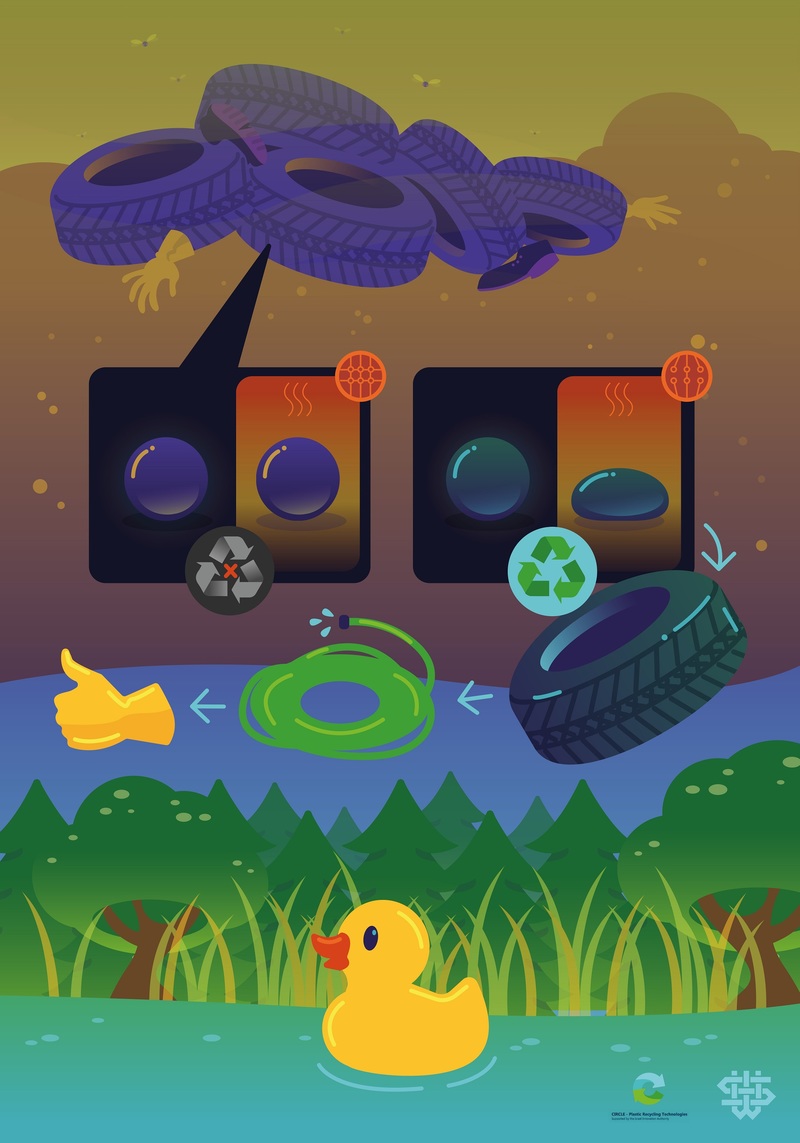
In this project, the student studied the properties of a recyclable material that could potentially replace non-recyclable elastomers (e.g., synthetic, cross-linked rubber). Vitrimers are materials made of covalent bond molecule chains. These covalent bonds are reversible, meaning that under certain conditions (pressure and temperature), thermosets with these kinds of bonds can be reprocessed and recycled. The non-recyclability of elastomers is a serious problem: rubber waste pollutes water sources and damages our climate. This project proposes a good alternative to rubber: a recyclable material that meets sustainability criteria and helps keep our planet healthy for future generations.
Optimizing Ion Exchanger Regeneration to Prepare Seawater for Desalination—Ben Barak and Einav Mahler, Chemical Engineering
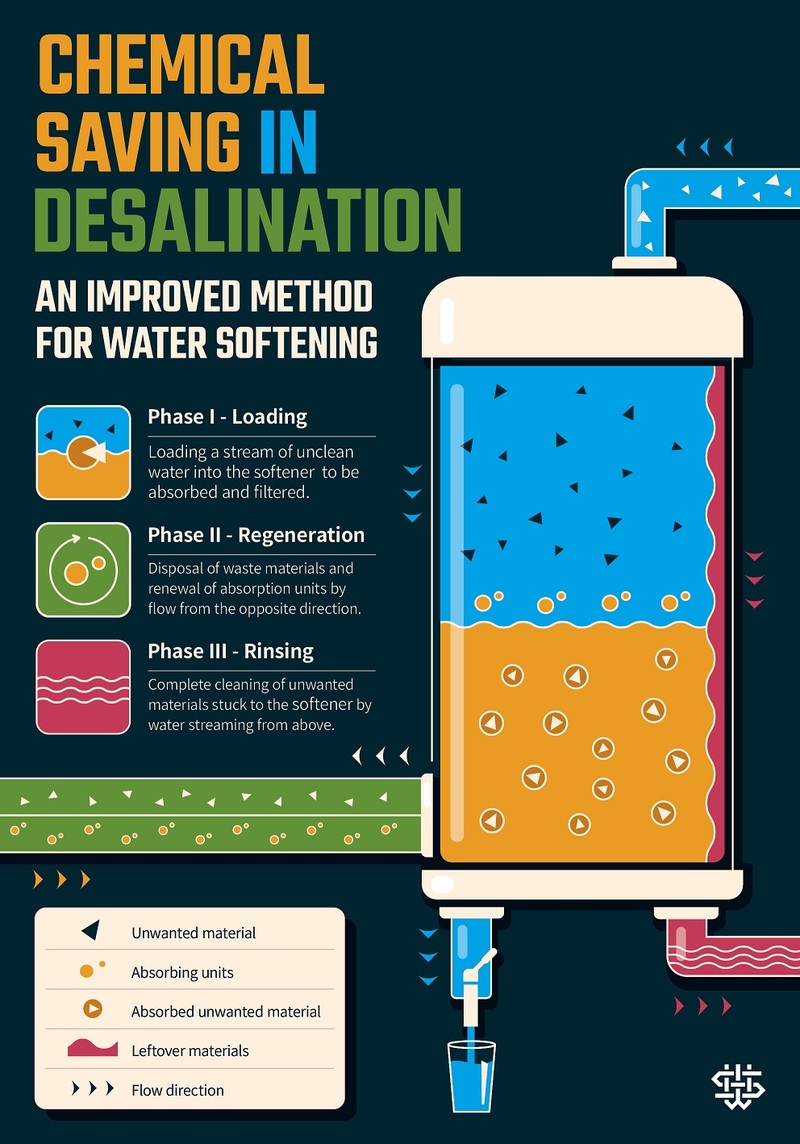
One of the steps in the water desalination process is removing minerals that cause hardness (much like descaling a kettle). Water desalination inevitably requires the use of chemicals. In the water softening step, acid is used. Making water desalination more eco-friendly means reducing the use of chemicals, including acid. In this study, Barak and Mahler optimized the water softening process in a desalination facility. Their research has helped the facility calculate the exact dosage of acid required, drastically reducing the amounts they had been using. Using acid responsibly helps meet the UN's Sustainability Development Goals.
The project was implemented at the Via Maris Desalination Plant at Palmachim, under the supervision of the plant's technologist.
The Cooling Island—Xenia Stepanova, Interior Building & Environment Design
This project attempts to address the effects of global warming. Rising global temperatures have a dramatic effect on big cities, and data shows that Tel Aviv is a "hot island" in Israel. This is the result of a shortage of vegetation, poor urban planning, and inorganic construction materials. For this project, Xenia Stepanova developed an infrastructure for growing plants without soil.
Designed for buildings with ground floor columns, which are very common in Israel, the system works with a variety of plants, depending on how much sun each area gets. Plants lower the air temperature, absorb carbon dioxide, emit oxygen, act as natural air filters, and attract the insects and birds that an urban ecosystem needs. The system requires no additional construction and does not consume electricity, which means it does not generate any additional heat.
Functionalization of Fish Leather—Achiad Zilberfarb, Polymer Materials Engineering
Achiad Zilberfarb has developed finishing processes for fish leather. As the planet's population grows, so does the demand for mariculture. The increasing consumption of marine organisms for food and other products generates ever-increasing amounts of waste and byproducts.
Functionalization of Fish Leather is part of Horizon 2020, the European Union's framework program for research and innovation. This project aims to reuse the waste generated by the fishing industry—namely, fish skins—as a sustainable raw material for the fashion industry. The project includes three coating and finishing processes. The first is a coating that prevents leather from degrading in contact with water, the second is a coating that prevents staining and degradation from contact with oil, and the third is an antibacterial and conductive process that could open the door for using fish leather for smart clothing and biomedical devices. There is hardly any research on finishing processes for fish leather. Most existing studies were done on cow leather.

Landfill to Landscape—Yomna Salem and Sahar Shahtoot, Interior Building & Environment Design
In this project, Yomna Salam and Sahar Shahtoot propose ways to recycle paper and fabric waste. Paper waste makes up 30% of all waste in Israel, while textile waste makes up 3%. Currently, most of the waste in Israel goes to the landfill, and only a small percentage gets recycled. This project is an attempt to recycle larger amounts of waste and add more green spaces to cities at the same time. To do this, the students developed a method for growing plants in fabric and recycled paper.
Multilayered Biodegradable Sheeting—Amir Shafi, Polymer Materials Engineering
Guided by professor Anna Dotan, Amir Shafi has developed biodegradable high barrier sheets.
It is no secret that we are surrounded by plastic waste. Whether on land or at sea, it harms animals, their natural habitats, and us—by polluting the environment and contributing to climate change. Packaging, and especially food packaging, makes up 40% of all plastic waste. This is why in recent years we have been seeing more and more biodegradable and renewable materials used in food packaging as an alternative to materials from fossil sources. However, these alternatives have poorer gas barrier properties than conventional plastic. To solve this problem, the student used a cellulose-based additive that improves gas barrier properties in sheets for use in food packaging.

"Salefet"—Meirav Mimron Merhav, Jewelry Design
When the world is hit by a pandemic, everything changes. Habits go out the window, and we need to think fast, make decisions, and improvise solutions.
This project is a result of the designer being limited to the materials she had available in her house. It began with a bowl of red onions in her kitchen, and quickly expanded to include more root vegetables: beets, turnips, radishes, and kohlrabi. To make the jewelry, the designer dried the vegetables and then reassembled them into new shapes. The process of making this jewelry is simple and accessible even to artisans in developing countries. The designer used ancient techniques, flattening and squashing her material.

Image credit: Shai Franko
A Surface Runoff Management Solution Inspired by Natural Water Systems—Oren Horowitz and Tsuf Bar-On, Interior Building & Environment Design
For this project, the students developed a modular flooring system for containing and routing surface runoff in cities. Inspired by natural water systems, the design aims to store water and route it for use in public spaces.
צילום בראש העמוד: אחיקם בן יוסף